Planning Your Beartooth Highway Scenic Drive: Views, Wildlife & When to Go
The allure of the American West is often found in its vast, untamed landscapes, and few drives capture this spirit quite like the Beartooth Highway. Nicknamed the “Highway to the Sky,” this engineering marvel and natural wonder is not merely a route; it's an experience. If you’re planning a trip to Yellowstone National Park, integrating the
Beartooth Highway scenic drive into your itinerary offers a truly spectacular entrance or exit, unveiling a panorama of alpine lakes, dramatic mountain switchbacks, abundant wildlife, and snow-capped peaks that will undoubtedly leave a lasting impression. My own journey along this stunning route in late June revealed an unforgettable blend of natural beauty and high-altitude exhilaration, making it the perfect prelude to exploring Yellowstone’s geysers and Grand Teton’s majestic spires, while also helping acclimate to the higher elevations.
What Makes the Beartooth Highway a Must-Drive for Every Adventurer?
Stretching for approximately 68-69 miles, the Beartooth Highway, officially U.S. Highway 212, is designated an All-American Highway for good reason. It’s a road that winds and climbs to incredible altitudes, reaching over 10,000 feet at Beartooth Pass, connecting the charming Montana town of Red Lodge to Cooke City, Montana. While the distance might seem modest, the experience is anything but.
Unparalleled Scenic Grandeur
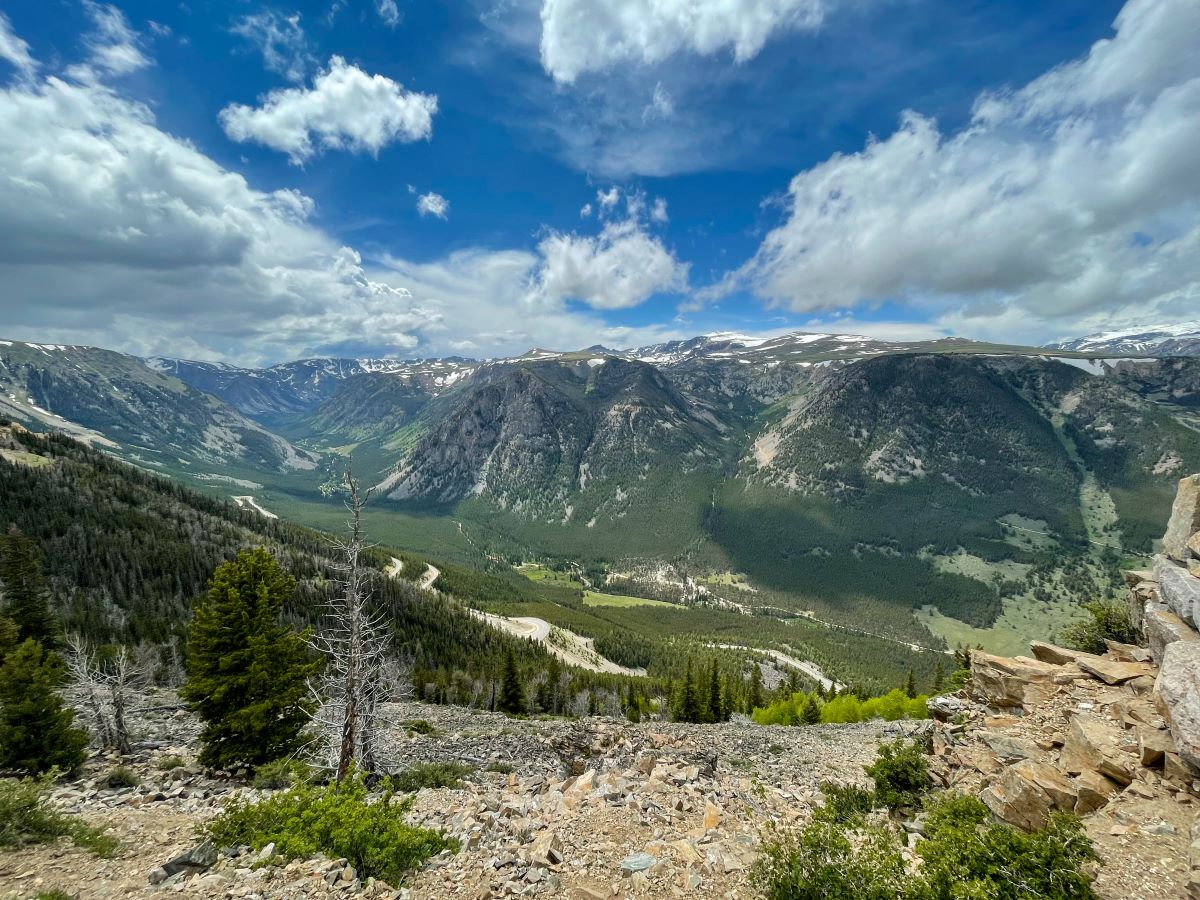
The drive is a masterclass in diverse ecosystems and breathtaking vistas. You’ll transition from lush alpine forests, teeming with evergreen trees and vibrant wildflowers in summer, to a stark, beautiful arctic tundra at the higher elevations. The road itself is an adventure, characterized by thrilling switchbacks and sections with sheer drop-offs that command respect and offer constant, unobstructed views of pristine lakes and towering 12,000-foot peaks. To the north, the majestic Beartooth Mountain Range stands sentinel, while the rugged Absaroka Mountain Range dominates the south. Even though it begins and ends in Montana, the highway gracefully weaves in and out of Wyoming, adding to its geographical intrigue. This dramatic scenery is precisely why so many consider the
Beartooth Highway to the Sky: A Guide to Montana & Wyoming's Peaks an essential part of their western adventure.
Abundant Wildlife Encounters
Beyond the geological wonders, the Beartooth Highway is a haven for wildlife. Keep your eyes peeled, and you might spot a variety of creatures adapted to this high-altitude environment. Common sightings include elk, moose, bighorn sheep, and even the elusive mountain goats clinging to steep cliffs. Marmots are frequently seen sunning themselves on rocks, and if you’re particularly lucky, you might glimpse a bear foraging in the distance. To maximize your chances, drive slowly, utilize the numerous pull-offs, and bring binoculars. Remember to always maintain a safe distance and never feed wildlife.
Planning Your Beartooth Highway Scenic Drive: Key Logistics
Embarking on the
Beartooth Highway scenic drive requires a bit of foresight to fully appreciate its grandeur. Knowing the route, drive times, and connections is crucial for a smooth journey.
The Route: Red Lodge to Yellowstone's Doorstep
The official Beartooth Highway stretch runs from Red Lodge to Cooke City, Montana. This 68-mile paved route typically takes about 2 hours of *active driving*, assuming you make several stops to soak in the views, snap photos, and explore short trails. However, if you're like most visitors, the Beartooth Highway serves as a magnificent gateway to Yellowstone National Park. Continuing on US Highway 212 past Cooke City will lead you directly to Yellowstone's northeast entrance, placing you conveniently near attractions like Lamar Valley.
For those looking to extend their scenic journey, a left turn onto Wyoming Highway 296 before reaching Cooke City will put you on the equally stunning Chief Joseph Scenic Byway, connecting the Beartooth Highway to Cody, Wyoming, a town rich in cowboy history.
Understanding Drive Times and Connectivity
While the core scenic drive is relatively short, incorporating it into a larger trip, especially from a major airport, extends the total travel time significantly. This allows you to truly immerse yourself in the experience.
Here are estimated drive times, accounting for the
Beartooth Highway scenic drive:
* **From Bozeman, Montana (BZN):**
* Bozeman to Red Lodge: 145 miles / approx. 2.5 hours
* Bozeman to Cooke City (via Beartooth): 209 miles / approx. 3.5 – 4 hours
* Bozeman to Roosevelt Lodge (Yellowstone NE Entrance, via Beartooth): 242 miles / approx. 4.5 hours
* Bozeman to Mammoth Hotel (Yellowstone North Entrance, via Beartooth): 260 miles / approx. 5 hours
* Bozeman to Gardiner (just north of Yellowstone North Entrance, via Beartooth): 265 miles / approx. 5 – 5.5 hours
* **From Billings, Montana (BIL):**
* Billings to Red Lodge: 62 miles / approx. 1 – 1.5 hours
* Billings to Cooke City (via Beartooth): 127 miles / approx. 2.5 hours
* Billings to Roosevelt Lodge (Yellowstone NE Entrance, via Beartooth): 159 miles / approx. 3.5 hours
* Billings to Mammoth Hotel (Yellowstone North Entrance, via Beartooth): 177 miles / approx. 4 hours
* Billings to Gardiner (just north of Yellowstone North Entrance, via Beartooth): 182 miles / approx. 4 hours
These times are for driving only and do not include the numerous stops you'll inevitably want to make for photos, short hikes, or simply to take in the awe-inspiring vistas. Factor in at least an additional 1-2 hours for enjoying the scenic pull-offs. The Beartooth Highway is truly
Beartooth Highway: Your Stunning Scenic Gateway to Yellowstone, offering a memorable start or end to your national park adventure.
The Best Time to Experience the Beartooth Highway
Timing is everything when it comes to the Beartooth Highway, as its high-altitude nature makes it susceptible to extreme weather conditions.
Seasonal Openings and Closures
The
Beartooth Highway scenic drive is generally open from the **Friday of Memorial Day weekend** (late May) until **October 15th**. For the rest of the year, the road is completely closed due to heavy snows, making it impassable. If your travel dates are close to the opening or closing periods, it is absolutely essential to check current road conditions. Snow can persist at the highest elevations well into July, and early fall snowstorms can close the highway unexpectedly. Always consult official sources like the Montana and Wyoming Department of Transportation websites or the US Forest Service for the latest updates.
Summer: The Prime Window (June - August)
The summer months are undeniably the best time to drive the Beartooth Highway. The weather is generally pleasant, and the entire route is accessible. A unique highlight of visiting in June or early July is the opportunity to witness impressive snowdrifts still clinging to the peaks and plateaus at the highest elevations, creating a stunning contrast with blooming alpine wildflowers. This blend of winter's remnants and summer's vibrancy makes for truly spectacular photography and an unforgettable journey.
Fall: A Cautious Beauty (September - Early October)
While beautiful, fall on the Beartooth Highway requires careful planning. The vibrant gold and orange hues of the changing foliage, particularly aspens and cottonwoods in the lower valleys, offer a picturesque scene. However, temperatures begin to drop significantly, and the risk of early season snow and subsequent road closures increases dramatically. If you plan a fall trip, be prepared for cold weather, pack layers, and diligently monitor weather and road reports.
Maximizing Your Beartooth Highway Adventure
To truly make the most of your
Beartooth Highway scenic drive, consider these practical tips:
* **Acclimatization:** The highway ascends to over 10,000 feet. If you're coming from sea level, take it easy. Stay hydrated, avoid strenuous activity immediately after arriving at high elevations, and listen to your body. For many, this drive serves as an excellent way to gradually acclimate to the higher elevations before tackling serious hiking in Yellowstone.
* **Fuel Up:** Services are extremely limited along the highway. Ensure your vehicle has a full tank of gas before leaving Red Lodge or Cooke City.
* **Pack Layers:** Mountain weather can change rapidly. Even on a warm summer day, temperatures at Beartooth Pass can be significantly cooler, and sudden storms are possible. Bring layers, including a warm jacket, hat, and gloves.
* **Stay Hydrated & Bring Snacks:** Carry plenty of water and snacks, as dining options are sparse.
* **Drive Cautiously:** The highway is an undivided road with numerous curves, steep grades, and sheer drop-offs. Respect the speed limits, take your time, and pull over at designated turnouts to admire the views and allow faster traffic to pass. Do not stop in active traffic lanes.
* **Capture the Memories:** Bring your camera with extra batteries and memory cards. Every turn offers a new, postcard-worthy view.
The Beartooth Highway is more than just a road; it's a journey through some of the most dramatic and pristine wilderness in the United States. Its majestic peaks, diverse wildlife, and engineering marvels combine to create an unforgettable experience. By planning for the right time of year and preparing for its unique challenges, your
Beartooth Highway scenic drive will undoubtedly become a highlight of your Yellowstone adventure, etching its breathtaking beauty into your memory for years to come.